
Use AIOps to find answers to the question of ‘what can I automate?’
David Arrowsmith • May 29, 2020
Based on our interactions with buyers evaluating vendors in the AIOps market, much of what we’re hearing chimes with this quote -
“What will AI allow us to automate? We'll be able to automate everything that we can describe. The problem is: it's not clear what we can describe.”
Stephen Wolfram, computer scientist and physicist https://lexfridman.com/stephen-wolfram/

The capability of vendors to take any system with a digital pulse, slurp data from it and do something with that data (be it alerts, events or metrics based) is all well and good.
The key is not to get stuck ‘down in the weeds’, unable to visualize
that crucial linkage between the state of the components and the health of the business services that the nuts and bolts ultimately support. Being able to understand infrastructure component health in a business context can in turn help to describe and pinpoint where automation can be applied, thus tackling Stephen’s aforementioned conundrum.
We’ve heard of several AIOps vendors tying themselves in knots deploying elaborate algorithms down at the event level, often using black box, patented tech – much to the frustration of customers!
Without the benefit of the comprehensive, data-driven service modelling and event enrichment capabilities, you’re faced with one big capabilities gap. Working with large enterprises over the years we’ve arrived at a point where we’re aligned to the actual business needs of the organizations we work with.
Our service-centric approach and the service models that are born from it are primarily focussed on service availability. A typical Interlink deployment results in dramatically reduced volumes of auto-created incidents, combined with the grouping of events around service models.
We use a balanced scorecard approach to apply weightings to different monitoring perspectives, some event-driven, and some metric-driven. Interlink gives customers the flexibility to define monitoring perspectives and weightings.

This puts customers in a strong position to identify (based on business context) automation opportunities that will yield most value – supporting faster root cause analysis, avoidance of SLA breaches for example.
Learn how an intelligent data fabric unifies machine data, strengthens security and delivers timely insight to improve resilience and decision-making
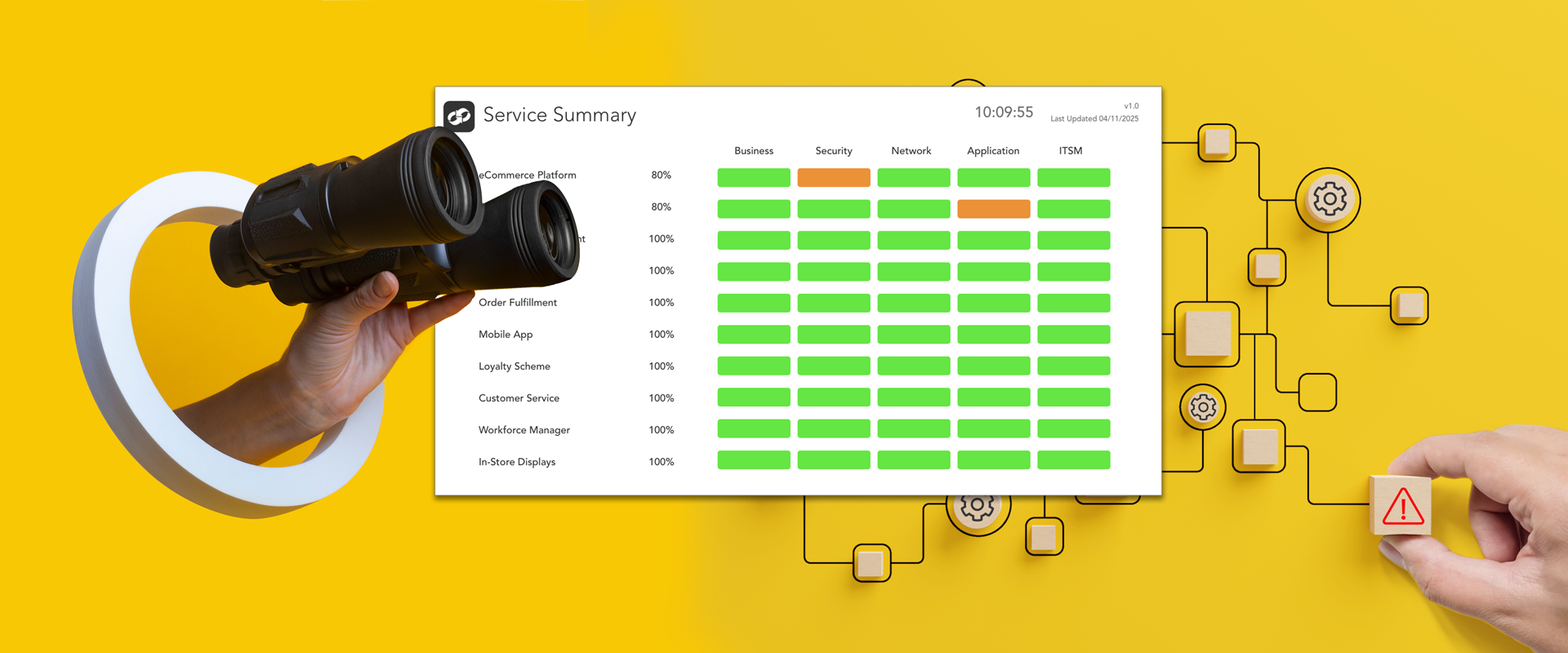
Interlink Software’s AIOps platform unifies observability, operations and orchestration to predict, prevent and resolve incidents faster across the enterprise.
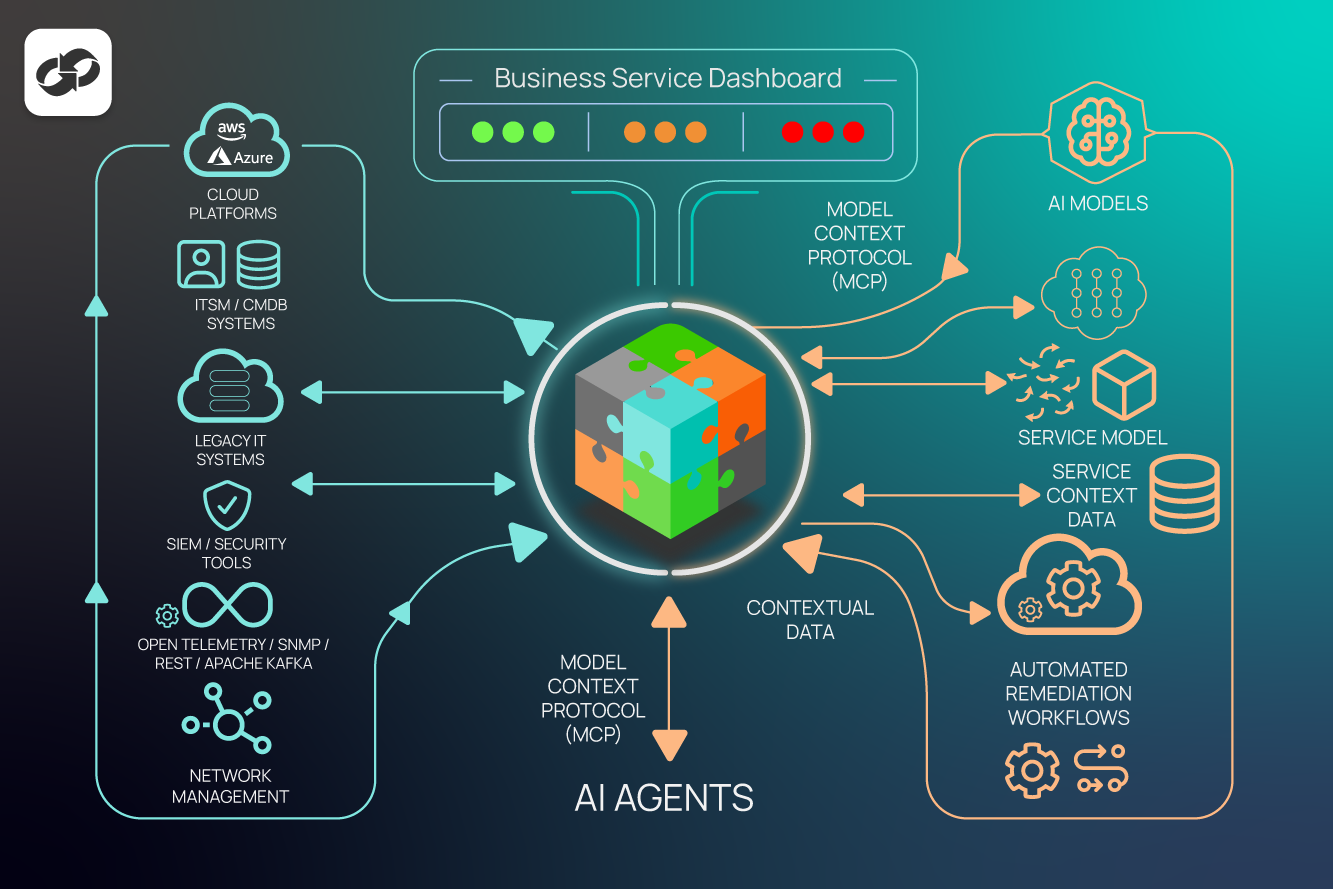
From fragmented hybrid environments to gaps in data quality. Interlink eliminates the blind spots with Integration Hub.
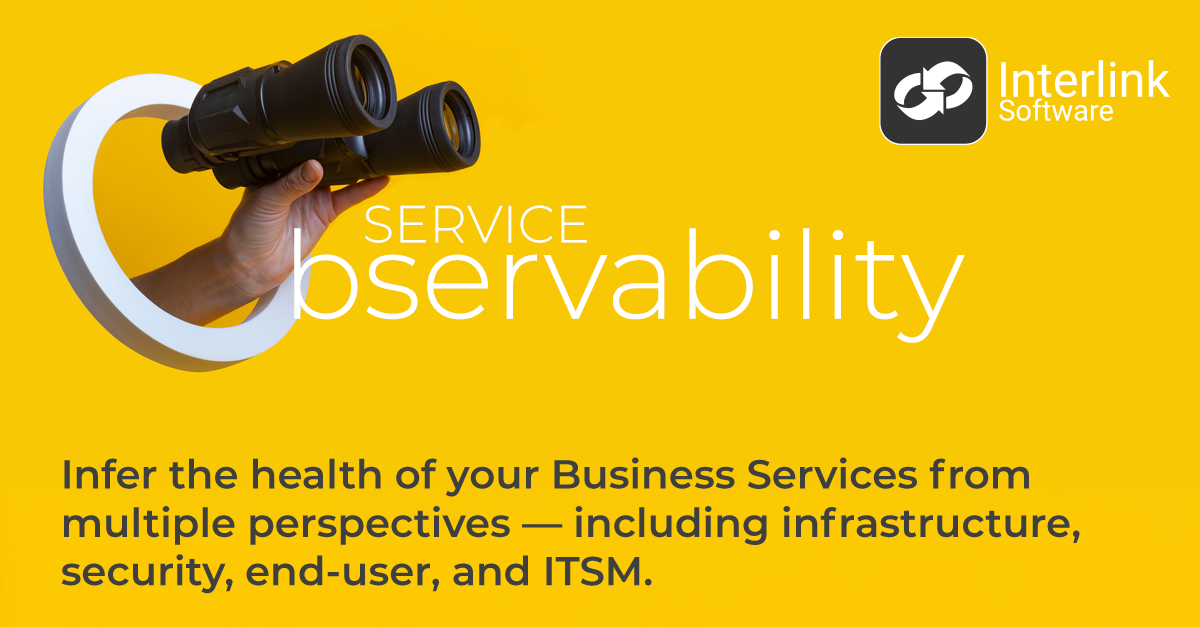
From Monitoring to Meaning: Why Service Observability Platforms Are Essential for Modern Enterprises
With Interlink’s Service Observability Platform, enterprises prevent IT incidents, speed RCA and link performance visibility to business goals.
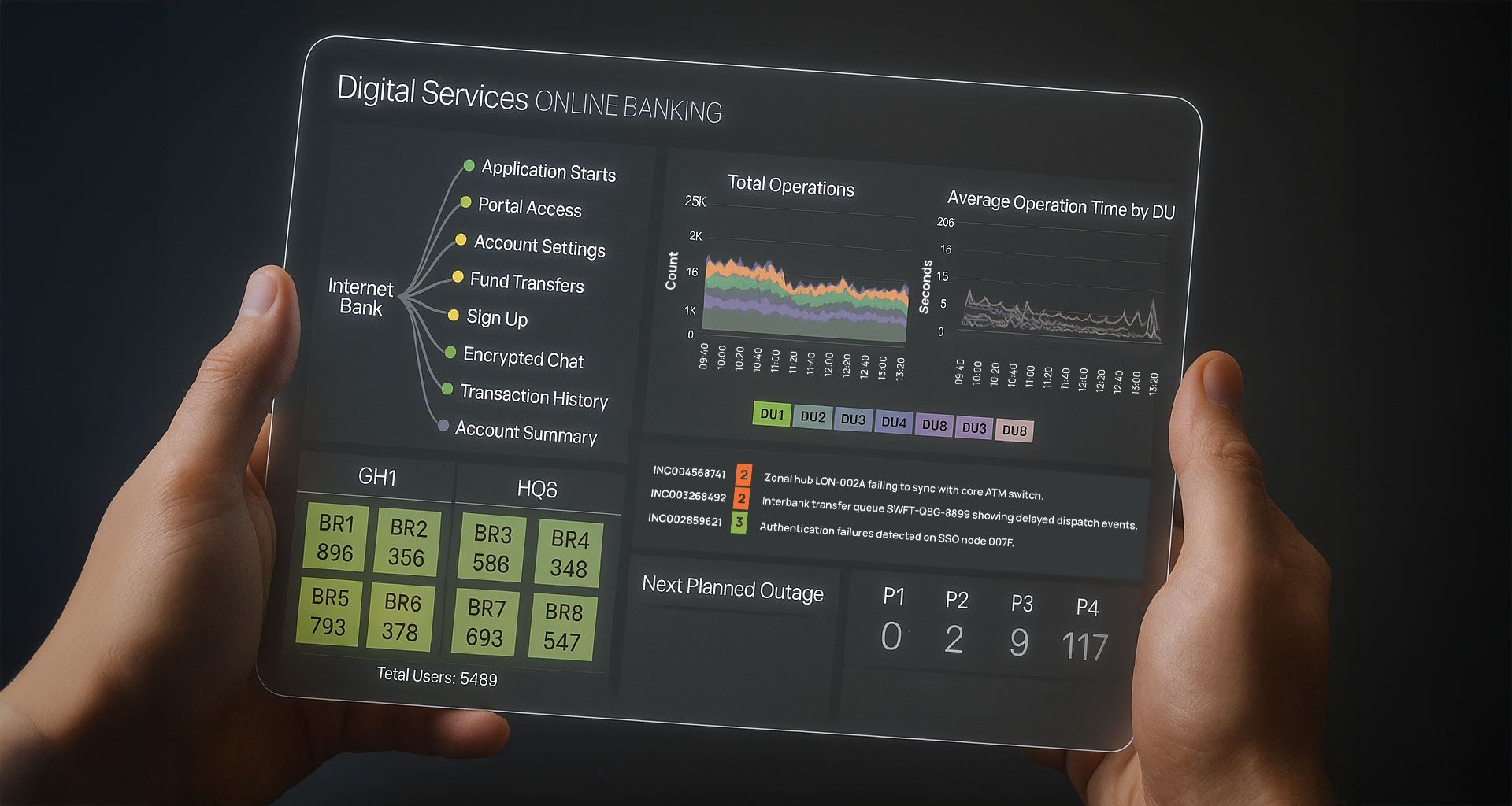
What is Single Pane of Glass Monitoring and How Can Enterprises Leverage It for Enhanced Visibility?
Single pane of glass monitoring solutions from Interlink Software, enables IT Ops and Observability Professionals to work in collaboration with shared data utilising the same view.

Discover the key differences between Event Intelligence Solutions and AIOps, when to use each, and how they shape enterprise IT operations.

Banks and financial institutions operate in one of the most complex, highly regulated and risk-averse industries.

Discover the 5 essential capabilities of modern Event Intelligence Platforms—AI-driven tools for real-time analysis, correlation, and response automation.
ITOps managers must ensure always-on availability across complex ecosystems, despite event storms, toolchain sprawl and slow root cause analysis - Learn more.
In today’s competitive and fast-paced retail environment, service availability is paramount to delivering exceptional customer experiences. As an ITOps Manager or Site Reliability Engineer in a large retail enterprise, you're tasked with managing complex, interdependent systems that support vital business functions such as supply chain operations, point-of-sale (POS) systems, and inventory management. Maintaining a resilient IT infrastructure isn’t just an operational need—it's essential for preserving customer satisfaction and protecting your brand’s competitive edge. Retail IT professionals face numerous challenges, including managing an ever-growing number of endpoints, ensuring seamless integration between legacy and modern systems, and reacting swiftly to potential failures that could lead to downtime. These issues are further amplified during high-traffic periods like holiday seasons or sales events, where even a minor disruption can have a major impact on both revenue and customer loyalty. The Solution: Interlink Software’s AIOps and Business Service Observability Platform. Interlink Software’s AIOps and Business Service Observability platform addresses these challenges head-on, offering a unified, real-time view of your entire IT ecosystem. This comprehensive oversight empowers teams to proactively manage incidents, preventing disruptions before they can affect business operations. Powered by advanced machine learning, Interlink’s platform delivers real-time predictive insights that allow IT teams to detect and resolve potential issues before they escalate. This predictive capability means you're no longer reacting to problems after they’ve impacted service; instead, you’re staying ahead of risks, ensuring optimal system performance and reliability. By consolidating data across all IT systems, the platform integrates seamlessly with your existing tools, enabling you to monitor the health and performance of the entire IT infrastructure in one place. From POS systems to eCommerce platforms, this holistic view eliminates blind spots and ensures that critical systems remain operational. Minimize Downtime and Maximize Efficiency Automating problem detection and resolution is key to reducing system downtime and minimizing the need for manual intervention. With Interlink’s AIOps capabilities, incidents are detected and addressed before they cause any service interruptions. This results in increased uptime, faster issue resolution, and ultimately a better experience for your customers—whether they're shopping online or in-store. For retail enterprises, where any system disruption can lead to lost sales and dissatisfied customers, this solution provides a crucial safeguard. During peak sales seasons, the ability to maintain seamless IT operations across eCommerce and store systems ensures smooth transactions and satisfied customers. Interlink’s AIOps and Business Service Observability platform not only enhances operational efficiency but also empowers your team to focus on strategic initiatives, rather than being bogged down by firefighting incidents. The result? Improved service reliability, happier customers, and a stronger competitive position in the retail market. Interested to learn more? Visit AIOps and Observability for Retail to explore how we can support you in driving operational resilience and optimizing business service availability.


